
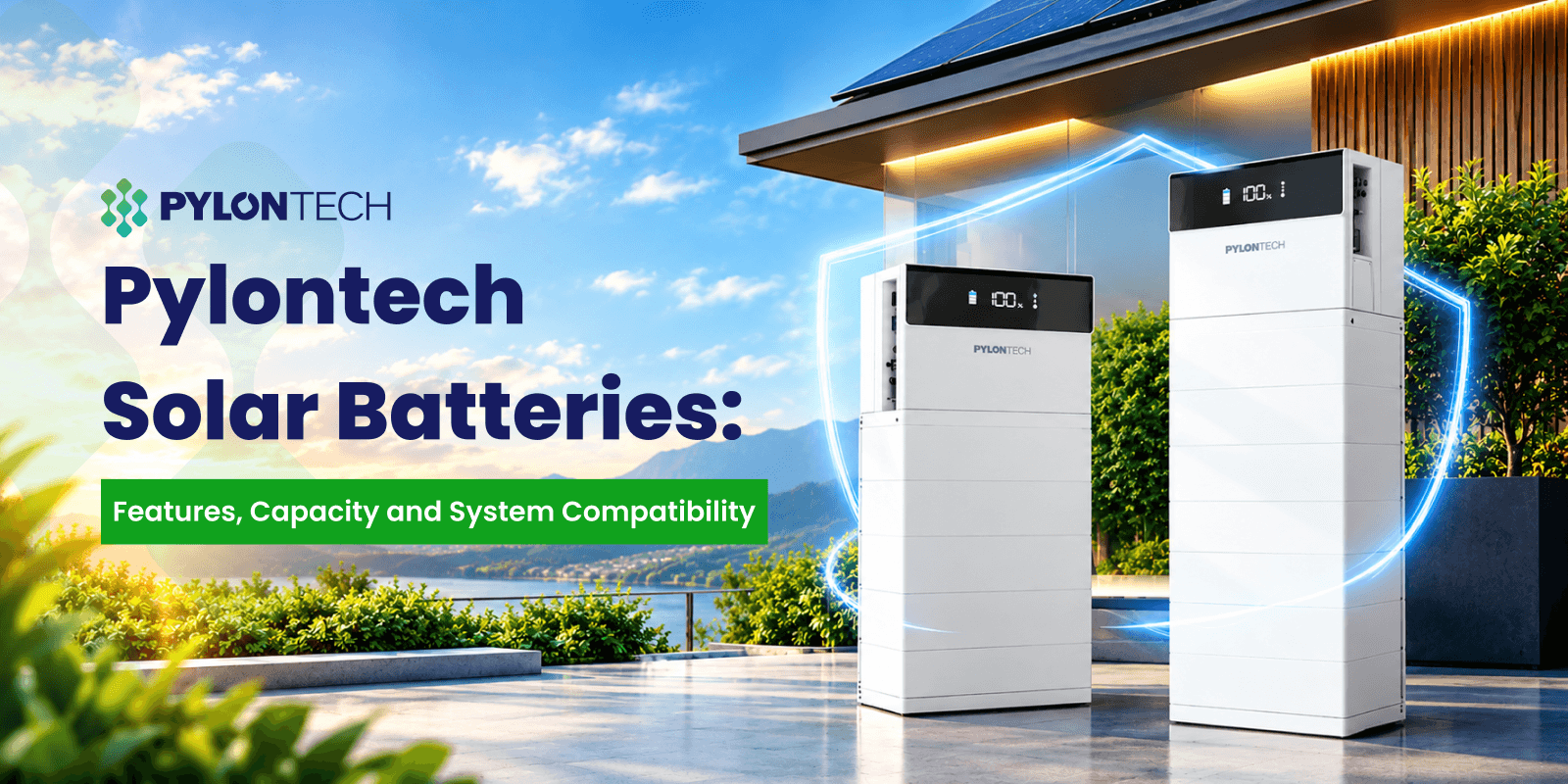
For solar installers and energy retailers, selecting the right battery storage products involves more than looking at capacity and price. The battery needs to fit the project requirements, integrate with the selected inverter and provide a practical solution that can be installed and commissioned efficiently.
Pylontech batteries are widely used in energy storage applications and offer modular solutions across different system configurations. For distributors and installers, this provides flexibility when specifying battery storage for residential and other solar projects.
At Achievers Energy, understanding the technical requirements behind battery selection helps installers source the right products for their projects. This includes looking at battery chemistry, capacity, voltage, scalability, communication and inverter compatibility.
Why Pylontech Batteries Are Relevant for Solar Installers
Battery storage requirements can vary significantly from one project to another. A smaller residential system may require a compact storage solution, while a larger household with higher electricity consumption may require multiple battery modules.
This is where modular battery platforms can provide useful flexibility.
Pylontech batteries are available in different product families and configurations, allowing installers to select a solution according to the requirements of a particular solar and storage system.
For distributors, having access to products across different capacity and voltage configurations is also important. It allows solar businesses to source equipment according to different project specifications rather than relying on a single battery format.
Key Features of Pylontech Battery Systems
When evaluating a battery for a solar project, installers typically need to consider several technical and practical factors.
Modular Design
A key feature across several Pylontech battery systems is their modular approach.
Instead of using one fixed-capacity battery for every application, compatible modules can be combined into larger battery configurations, depending on the specific product’s specifications.
This can make it easier for installers to build storage capacity around the requirements of individual projects.
For example, a customer with relatively low energy consumption may require a smaller configuration, while a property with higher evening demand may require additional storage capacity.
From a distribution perspective, modular products can also support a wider range of project requirements from the same product family.
Lithium Iron Phosphate Battery Chemistry
Several Pylontech energy storage products use lithium iron phosphate (LFP) chemistry.
LFP batteries are commonly used in stationary energy storage because of their combination of cycle performance, thermal characteristics and operational stability.
For installers, however, battery chemistry is only one part of product selection. The complete system needs to be evaluated, including the battery management system, inverter compatibility, operating limits and installation requirements.
Battery Management System
The Battery Management System (BMS) is an important part of a modern battery storage solution.
It monitors and manages battery operating parameters such as voltage, current and temperature. It also enables communication between the battery and compatible system equipment.
For installers, correct BMS communication is particularly important during system commissioning.
A battery and inverter may both be technically suitable for solar storage but still require the correct communication configuration, firmware and settings to operate together as intended.
Understanding Pylontech Battery Capacity
Battery capacity is generally measured in kilowatt-hours (kWh) and indicates how much energy the battery can store.
However, installers should distinguish between nominal capacity and usable capacity when comparing battery products.
Nominal capacity represents the battery’s stated total capacity, while usable capacity refers to the amount of energy available within the manufacturer’s specified operating limits.
The available capacity also depends on the particular Pylontech model and configuration.
This is why installers should always refer to the current technical documentation for the exact product rather than applying specifications from one Pylontech battery model to another.
Choosing the Right Pylontech Battery Capacity
Battery capacity should be selected according to the requirements of the complete solar system.
Installers may need to consider:
- Existing solar PV capacity
- Daily energy consumption
- Evening and overnight loads
- Peak household demand
- Desired backup requirements
- Inverter capacity
- Battery charge and discharge power
- Future electricity demand
- EV charging requirements
- Available installation space
For example, a home with high evening consumption may require considerably more storage than a property where most electricity is consumed during daylight hours.
The objective is not simply to specify the largest available battery. Instead, the battery should be appropriately matched to the customer’s energy profile and the rest of the system.
Pylontech Solar Battery Compatibility
Compatibility is one of the most important considerations when sourcing a Pylontech solar battery.
A battery cannot be selected independently of the inverter and other system components. The battery and inverter need to support the required electrical and communication specifications.
Installers should check factors such as:
- Battery voltage range
- Inverter compatibility
- Communication protocol
- CAN or other communication interfaces
- Maximum charge current
- Maximum discharge current
- Supported battery configurations
- Firmware requirements
- Number of battery modules supported
- System operating limits
The compatibility requirements can vary between Pylontech product families and individual inverter models.
For this reason, distributors and installers should always verify the current manufacturer compatibility documentation before placing an order for a specific project.
High-Voltage and Low-Voltage Pylontech Systems
Pylontech offers battery solutions across different system architectures, making voltage an important consideration during product selection.
High-Voltage Battery Systems
High-voltage systems combine multiple battery modules to operate at a higher DC voltage and are designed to work with compatible high-voltage hybrid or battery inverters.
The exact voltage range depends on the battery configuration.
Low-Voltage Battery Systems
Low-voltage batteries operate within a different voltage architecture and require compatible inverter equipment.
The two system types should not be treated as interchangeable simply because their storage capacities may appear similar.
For installers, identifying the required battery voltage early in the system design process helps narrow down compatible battery and inverter combinations.
Pylontech Batteries and Inverter Compatibility
The inverter plays a central role in a solar battery storage system.
It manages the conversion and movement of electricity between the solar array, battery, household loads and grid. For this reason, the inverter must be compatible with the battery’s electrical and communication requirements.
When sourcing Pylontech battery systems, installers should check the approved compatibility information for the specific inverter and battery combination.
This is particularly important when working with different inverter brands or product generations.
Compatibility should be confirmed before installation rather than discovered during commissioning.
Scalability for Different Solar Projects
One of the advantages of modular battery systems is the ability to configure storage according to project requirements.
For a distributor, this can be particularly relevant because installers work across a wide variety of system sizes.
A modular Pylontech configuration may be suitable for projects where:
- The customer’s energy consumption is expected to increase
- Additional storage may be required in the future
- The initial system needs to be sized around current consumption
- Multiple battery modules are required to reach the desired capacity
However, expansion should always follow the manufacturer’s requirements. Installers should confirm the maximum number of supported modules, compatible configurations and any conditions associated with adding battery capacity.
What Installers Should Check Before Ordering Pylontech Batteries
Before sourcing a Pylontech battery storage system, installers should confirm the following:
| Consideration | What to Check |
|---|---|
| Battery model | Exact Pylontech product and generation |
| Capacity | Nominal and usable capacity |
| Voltage | Low-voltage or high-voltage architecture |
| Inverter | Compatible inverter model |
| Communication | Supported communication protocol and connection |
| Power | Maximum charge and discharge specifications |
| Scalability | Supported number of battery modules |
| Installation | Manufacturer’s installation requirements |
| Approvals | Current Australian product approval requirements |
| Warranty | Current manufacturer warranty terms |
Checking these details before ordering can help reduce compatibility issues and avoid unnecessary delays during installation.
Why Product Availability Matters to Installers
Technical specifications are only one part of sourcing solar equipment.
For installers managing multiple projects, product availability and supply consistency can also affect project scheduling.
A distributor that understands the technical requirements of the products it supplies can help installers identify the appropriate equipment for their project specifications.
This becomes particularly important when a project requires a specific battery capacity, voltage configuration or compatible inverter combination.
Having access to a broader range of energy storage products can also give installers more flexibility when designing systems for different customer requirements.
Supporting Complete Solar and Battery System Design
A battery should always be considered as part of the complete energy system.
The solar panels, inverter, battery, monitoring platform and electrical installation all need to work together.
For distributors, this means product selection should go beyond simply supplying a battery based on its kWh capacity.
Installers need access to products that align with the technical requirements of the project, including inverter compatibility, system voltage and communication requirements.
This system-level approach can help solar businesses build storage solutions that are easier to specify, install and commission.
Why Work With a Solar Distributor for Battery Supply?
For installers, working with an experienced solar distributor can simplify the sourcing process.
A distributor can provide access to multiple product categories and brands, helping installers source the components required for different project types.
At Achievers Energy, our product portfolio covers solar panels, inverters and battery storage solutions from established manufacturers. This gives Australian solar businesses access to equipment for a range of residential and commercial applications.
Our focus is on supporting installers and solar businesses with product availability and industry-focused supply, rather than simply offering individual products.
Sourcing Pylontech Batteries for Your Next Project
Pylontech batteries provide modular energy storage options that can be configured for different solar system requirements. For installers, key considerations include battery capacity, voltage, chemistry, communication, inverter compatibility and scalability.
Selecting the correct model and configuration at the sourcing stage can help ensure that the battery integrates properly with the rest of the system.
At Achievers Energy, we support solar professionals with access to Pylontech battery systems and a broader range of solar and energy storage products.
Looking to source Pylontech batteries for your next solar project? Contact Achievers Energy to discuss your project requirements and available battery storage solutions.


