
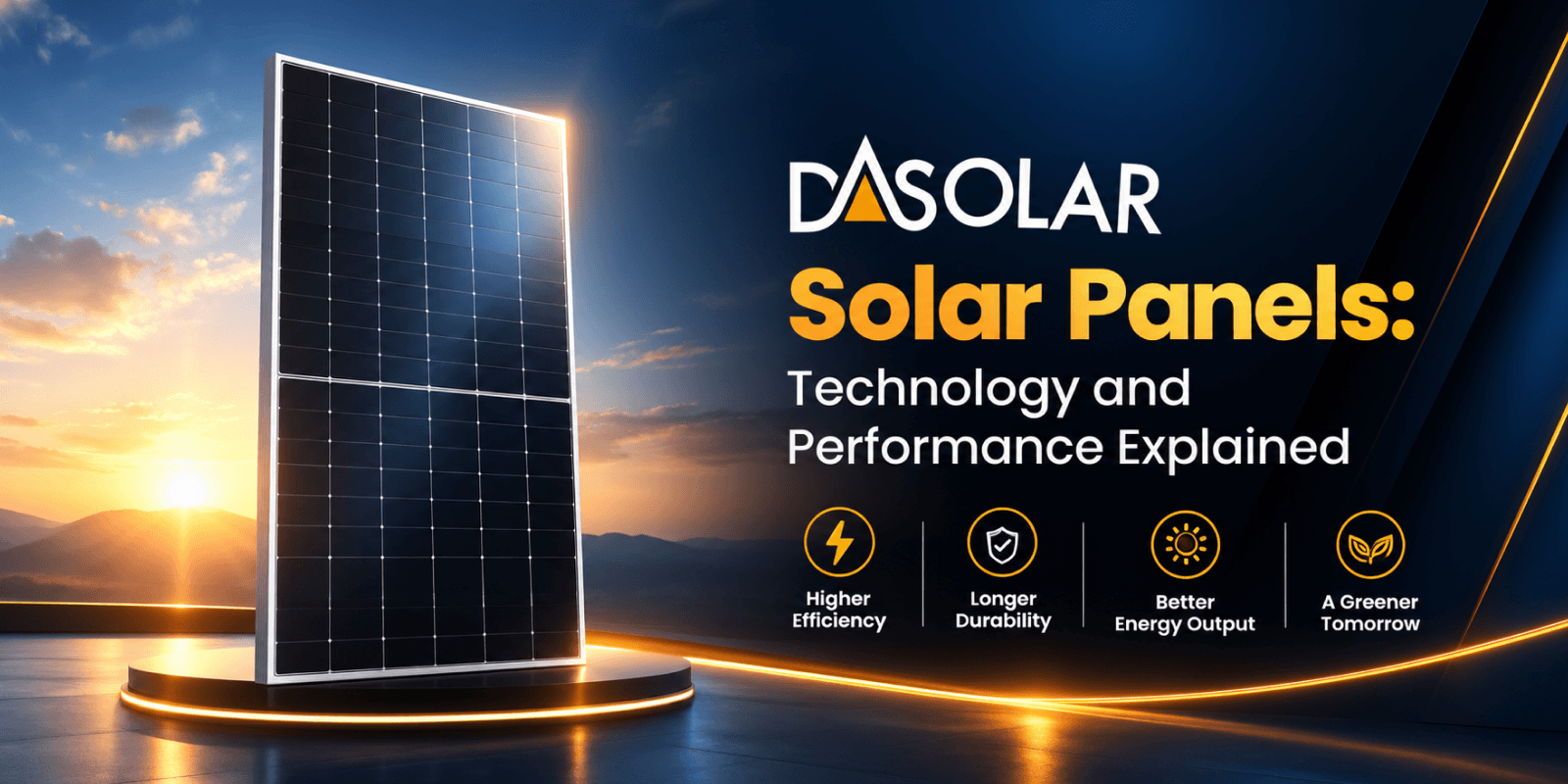
Choosing the right solar module is an important part of designing reliable solar energy systems, particularly for installers and businesses managing projects where module performance, quality and long-term reliability directly affect system output.
DA Solar is a solar module manufacturer offering PV solutions across different applications. For solar businesses, understanding the technology behind DA Solar panels can help when comparing modules for residential, commercial and larger-scale projects.
This guide looks at the key aspects of DA Solar panels, including module technology, efficiency, durability, temperature performance and factors that installers should consider when selecting panels for solar energy solutions.
Understanding DA Solar Panel Technology
Modern solar modules are designed to achieve more than simply converting sunlight into electricity. Cell technology, module construction, materials and manufacturing processes all influence how a panel performs throughout its operating life.
When evaluating DA Solar panels, installers should consider factors such as:
- Cell technology and module architecture
- Module efficiency
- Power output
- Temperature coefficient
- Performance under different environmental conditions
- Mechanical load resistance
- Degradation and warranty terms
- System compatibility
- Available module formats and power classes
These factors become particularly important when selecting panels for solar panels for businesses, where available roof area, energy demand and long-term system performance need to be considered together.
Cell Technology and Module Design
The solar cell is the primary power-generating component of a PV module. Advances in cell architecture have enabled manufacturers to produce modules with higher power outputs and improved energy generation from a similar physical footprint.
Depending on the specific DA Solar module series, available technologies and specifications can vary. Therefore, installers should refer to the current product datasheet rather than selecting a module based only on its headline wattage.
For a project, the relevant specifications typically include:
| Specification | Why It Matters |
|---|---|
| Maximum power (Wp) | Determines the rated output of the module |
| Module efficiency | Indicates how effectively available sunlight is converted into electricity |
| Temperature coefficient | Helps assess performance as module temperature increases |
| Voc and Isc | Important for electrical system design |
| Operating voltage | Must be compatible with the selected inverter |
| Mechanical load rating | Relevant for installations exposed to wind or snow loads |
| Dimensions and weight | Affect mounting and roof-layout requirements |
| Warranty | Provides information about product and performance coverage |
Looking at these specifications together gives installers a better understanding of solar panel quality than focusing on wattage alone.
Solar Panel Efficiency and Energy Generation
Module efficiency indicates the percentage of sunlight converted into usable electrical energy under standard test conditions.
Higher efficiency can be particularly useful where installation space is limited. For commercial rooftops, for example, installers may need to maximise generation from a fixed roof area while working around HVAC equipment, access paths, structural limitations and other rooftop infrastructure.
However, module efficiency should not be considered in isolation.
Actual energy generation is also influenced by:
- Solar irradiation
- Module orientation and tilt
- Shading
- Ambient and module temperature
- Soiling
- System losses
- Inverter efficiency
- Cable losses
- Installation quality
- Operating conditions
This means a good solar design evaluates the complete system rather than relying on the module’s efficiency rating alone.
Temperature Performance
Solar modules operate outdoors and are exposed to changing temperatures throughout the day. As module temperature increases, electrical output generally decreases.
The temperature coefficient is therefore an important specification when comparing modules for projects in warmer climates.
For commercial and industrial installations, this becomes particularly relevant because rooftop modules can experience temperatures considerably higher than ambient conditions.
When evaluating a DA Solar module for a project, installers should check its temperature coefficient and consider the expected operating environment during system design.
This helps provide a more realistic understanding of potential energy production rather than relying solely on laboratory-rated output.
Durability and Solar Panel Quality
A solar module is expected to remain outdoors for many years. As a result, physical durability is an important part of overall solar panel quality.
Modules can be exposed to:
- Strong winds
- Rain and humidity
- Dust and pollution
- High temperatures
- UV radiation
- Thermal cycling
- Mechanical stresses
Module construction, encapsulation, glass, frame design and junction-box components all contribute to how a panel handles these conditions.
For installers and distributors, checking the manufacturer’s technical documentation and warranty terms is important before specifying a particular module for a project.
Performance Over the Operating Life
Solar panels do not produce the same output throughout their entire operating life. Module performance gradually decreases over time, which is commonly referred to as degradation.
When comparing modules, solar businesses should review the manufacturer’s performance warranty and understand:
- Initial degradation terms
- Annual degradation rate
- Guaranteed power output at the end of the warranty period
- Product warranty duration
- Conditions and exclusions associated with the warranty
These details provide a more useful picture of long-term module performance than the initial wattage rating alone.
For businesses investing in solar energy systems, long-term performance is particularly important because the financial benefits of a project are linked to energy generation over many years.
DA Solar Panels for Commercial Applications
Commercial solar projects often have different requirements from residential installations.
A business may be looking to reduce daytime electricity consumption, offset operational energy costs or make better use of available rooftop space. This makes module selection an important part of the overall project design.
When considering DA Solar panels for commercial applications, installers should assess:
Available roof area
The available installation area determines how many modules can be accommodated and what module dimensions are practical.
Energy consumption profile
Businesses with significant daytime electricity consumption may be able to make direct use of a larger proportion of their solar generation.
Electrical design
Module voltage, current and power ratings need to work with the selected inverter and system configuration.
Environmental conditions
Roof temperature, wind exposure, dust levels and other site conditions should be considered when selecting and installing modules.
Long-term project requirements
Warranty conditions, degradation characteristics, expected operating life and maintenance requirements should form part of the project evaluation.
This approach allows solar businesses to match the module to the application instead of treating every installation in the same way.
Solar Energy Systems: Module Selection Is Only One Part
Even a high-quality module is only one component of a complete PV system.
The final performance of solar energy systems depends on how different components work together. These can include:
- Solar modules
- Inverters
- Mounting structures
- DC and AC cabling
- Protection equipment
- Monitoring systems
- Batteries, where applicable
Installation practices also have a direct effect on system performance.
Incorrect cable sizing, poor connections, shading, unsuitable mounting or inadequate system commissioning can reduce energy generation regardless of the module selected.
For this reason, installers should evaluate DA Solar panels as part of the complete system design.
What Installers Should Check Before Ordering
Before selecting DA Solar panels for a project, solar businesses can use a simple technical checklist:
1. Check the current datasheet
Confirm the exact model, power rating, efficiency, dimensions and electrical characteristics.
2. Confirm inverter compatibility
Check module voltage and current against the inverter’s operating range and maximum input specifications.
3. Review site conditions
Consider roof structure, temperature, wind exposure, shading and other environmental factors.
4. Compare warranties
Look at both product and performance warranties rather than focusing only on the headline warranty period.
5. Consider system layout
Module dimensions and power output can affect string configuration, roof utilisation and overall system design.
6. Consider project economics
Compare module cost with expected generation, available installation area, system size and long-term performance requirements.
Why Solar Panel Quality Matters for Solar Businesses
For installers and distributors, module quality is not simply a product specification. It can affect project performance, customer expectations and the long-term operation of the system.
A module should therefore be evaluated across multiple parameters, including electrical performance, construction, environmental durability, warranty coverage and compatibility with the rest of the system.
This is particularly relevant for solar energy solutions designed for commercial and industrial customers, where system size and energy requirements can make small differences in performance significant over time.
Sourcing Solar Modules for Your Projects
For solar businesses, having access to suitable modules is only one part of project procurement. Consistent product availability, technical documentation, product support and compatibility with commonly used system components can also influence project planning.
As a solar distributor, Achievers Energy supports installers and solar businesses with access to a range of solar modules, inverters and battery storage products for different project requirements.
When selecting DA Solar panels or any other module, our team can help businesses assess product specifications against their project requirements and broader system design.
Final Thoughts
DA Solar panels can be evaluated across the same core parameters that matter for any PV module: cell and module technology, efficiency, temperature performance, durability, degradation, warranty coverage and system compatibility.
For installers working on solar panels for businesses, the right approach is to look beyond the panel’s rated wattage and assess how the module fits into the complete solar energy system.
By combining appropriate module selection with sound system design, quality installation and suitable supporting components, solar businesses can build solar energy solutions designed around the specific requirements of each project.
For current DA Solar module specifications and project requirements, speak with Achievers Energy to discuss available products and sourcing options for your next solar project.


