
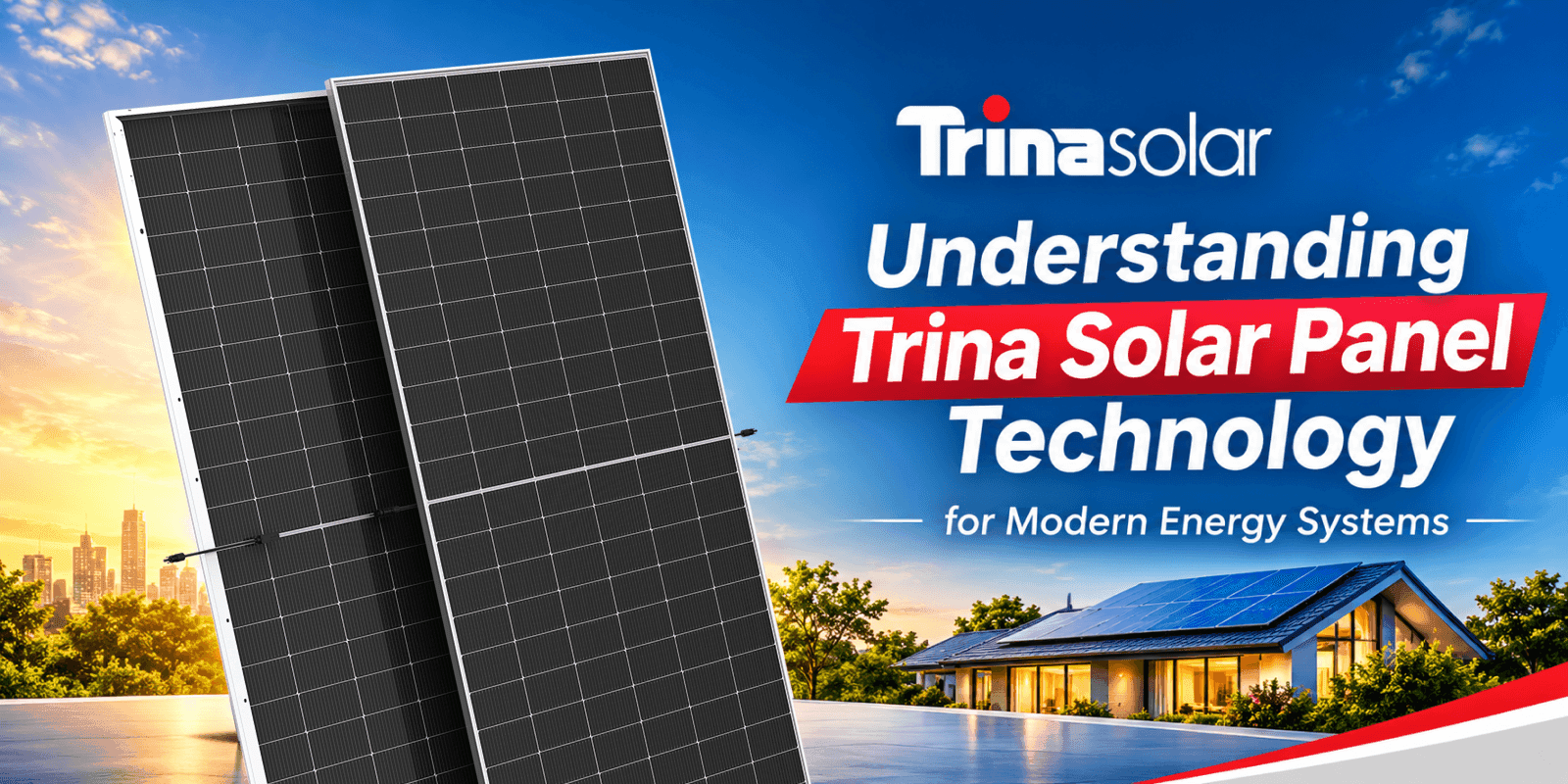
Solar technology continues to develop as homeowners, businesses and solar installers explore different options for their energy requirements. Solar panels are an important part of these systems because they convert sunlight into electricity for residential and commercial applications.
Trina Solar is one of the solar panel brands available in the Australian market, offering different photovoltaic (PV) module models for various installation requirements. Understanding the product design, module specifications and system compatibility can help solar professionals make informed equipment selections.
At Achievers Energy, we supply solar products from established industry brands, including Trina Solar panels, inverters, batteries and other system components. This article discusses Trina solar panel technology, product characteristics and factors to consider when selecting modules for modern solar installations.
1. Understanding Trina Solar Panel Technology
Trina Solar panel technology covers different photovoltaic module designs and product series developed for solar energy applications.
Solar panels contain photovoltaic cells that convert sunlight into electrical energy. The design and specifications of these modules can vary depending on the product model and its intended application.
When reviewing a solar module, installers and solar businesses generally consider the following information:
- Solar cell type
- Module configuration
- Rated power output
- Module efficiency specifications
- Electrical characteristics
- Physical dimensions and weight
- Product documentation and warranty details
These specifications provide useful information when comparing available solar panel models and assessing their suitability for a particular project.
2. Understanding Solar Cell Types
Solar panels are available with different photovoltaic cell technologies. N-type and P-type are two common categories used in solar module manufacturing.
These cell types have different structures and manufacturing characteristics. The technology used in a particular module is generally mentioned in its product specifications or manufacturer’s datasheet.
Some Trina Vertex S+ modules available through Achievers Energy use N-type monocrystalline cells.
When reviewing these modules, installers can consider:
- Cell type and module configuration
- Product model and rated capacity
- Electrical specifications
- Module dimensions
- Manufacturer documentation
Checking the exact model information is important because specifications can differ between products within the same product series.
For businesses sourcing Trina Solar Panels, understanding these basic characteristics can help with product comparisons and equipment selection.
3. Understanding Dual-Glass Solar Panel Construction
Solar panels are manufactured using different module construction designs. One design available in selected Trina Vertex S+ products is dual-glass construction.
As the name suggests, dual-glass modules use glass on both the front and rear sides of the panel.
This construction is one of the product characteristics that installers may review when comparing different solar modules.
Other points to consider include:
Module structure: Review the manufacturer’s description of the front and rear glass construction.
Physical dimensions: Check the panel’s length, width and thickness before planning the installation.
Module weight: Consider the product weight when assessing handling and mounting requirements.
Installation requirements: Follow the manufacturer’s installation instructions for the selected module.
The product datasheet provides the relevant information for understanding the construction and installation requirements of each model.
4. Power Output and Module Specifications
Power output is an important specification when comparing solar panels. It is generally measured in watts (W).
Achievers Energy lists the Trina 440W Vertex S+ N-Type DG module, model TSM-440NEG9R.28, in its solar panel range.
The product information on the Achievers Energy website identifies this model as a 144-cell N-type monocrystalline solar module with dual-glass construction and approximately 440W peak power.
When comparing different solar modules, installers may review the following specifications:
- Rated power output
- Module efficiency
- Open-circuit voltage (Voc)
- Short-circuit current (Isc)
- Maximum power voltage (Vmp)
- Maximum power current (Imp)
- Module dimensions and weight
These details help solar professionals understand the electrical and physical characteristics of individual products.
5. Trina Solar Panels for Residential and Commercial Applications
Solar panel requirements can differ depending on the type of property and the proposed installation.
Residential solar projects generally involve considering available roof space, panel placement, household electricity requirements and the proposed system capacity.
Commercial installations may involve larger roof areas, different building layouts and additional electrical planning.
Trina Solar Energy Solutions can be explored as part of the product selection process for different solar installation requirements.
Before selecting a module, solar installers and businesses can consider:
- Available roof or ground installation area
- Required solar system capacity
- Module dimensions and weight
- Roof orientation and shading
- Electrical system configuration
- Installation requirements
The final selection should be based on the actual project requirements and the specifications of the chosen product.
6. How Solar Inverter Systems Work With Solar Panels
Solar panels and inverters are two important components of a photovoltaic installation.
Solar panels generate direct current (DC) electricity from sunlight. A compatible solar inverter converts this electricity into alternating current (AC) for use within an electrical system.
This is why Solar inverter systems are an important consideration when planning a solar installation.
When selecting an inverter for a solar panel installation, installers generally review:
Voltage compatibility: Check the solar panel voltage specifications against the inverter’s permitted input voltage.
Current specifications: Review the current ratings of the selected modules and the inverter’s input limits.
MPPT configuration: Consider the inverter’s Maximum Power Point Tracking (MPPT) inputs when planning the solar panel arrangement.
System capacity: Review the planned solar array capacity alongside the inverter’s specifications.
Product compatibility: Check the relevant manufacturer documentation before finalising the panel and inverter combination.
These checks help solar professionals assess whether the selected equipment is appropriate for the proposed system design.
You can also explore the Solar inverter range available at Achievers Energy.
7. Factors to Consider Before Selecting Trina Solar Modules
Before sourcing solar panels for a project, installers and distributors should review the product information and installation requirements.
The following factors can help guide the selection process:
1. Rated power: Check the nominal power rating of the selected module.
2. Module efficiency: Review the manufacturer’s stated efficiency specifications.
3. Cell type: Identify whether the module uses N-type or P-type photovoltaic cells.
4. Physical dimensions: Confirm that the module dimensions are suitable for the planned installation area.
5. Electrical characteristics: Review voltage and current specifications when planning the solar array.
6. Product documentation: Refer to the manufacturer’s datasheet, installation instructions and warranty information.
7. Inverter compatibility: Check the electrical compatibility of the proposed panel and inverter combination.
Reviewing these details can help solar businesses compare available products before making purchasing decisions.
8. Exploring Trina Solar Products Through Achievers Energy
Selecting solar equipment involves reviewing product specifications, availability and suitability for the intended project.
Achievers Energy is an Australian solar product wholesaler and distributor supplying equipment for residential and commercial solar applications. Its product range includes solar panels, inverters, batteries, mounting equipment and electrical components.
The Trina products listed on the Achievers Energy website include:
- Trina 440W Vertex S+ N-Type DG (TSM-440NEG9R.28)
- Trina 440W Vertex S+ DG All Black (TSM-440NEG9R.25)
These products have their own model details and product specifications, which can be reviewed before selecting equipment for a project.
Explore the Trina 440W Vertex S+ N-Type DG solar panel to view the available product information.
You can also browse the Solar panel range to explore other brands and module options.
For product enquiries, technical information or wholesale supply requirements, contact the Achievers Energy team.
Conclusion
Trina Solar offers different photovoltaic modules with varying product designs, cell types and electrical specifications. Understanding these characteristics can help solar installers and businesses compare available products for different installation requirements.
Factors such as rated power, module construction, physical dimensions and electrical compatibility are relevant when selecting solar panels and related system components.
By reviewing product information and manufacturer documentation, solar professionals can make informed equipment selections based on their project requirements.
Achievers Energy provides access to selected Trina Solar modules and other solar system components for Australian solar businesses.


