
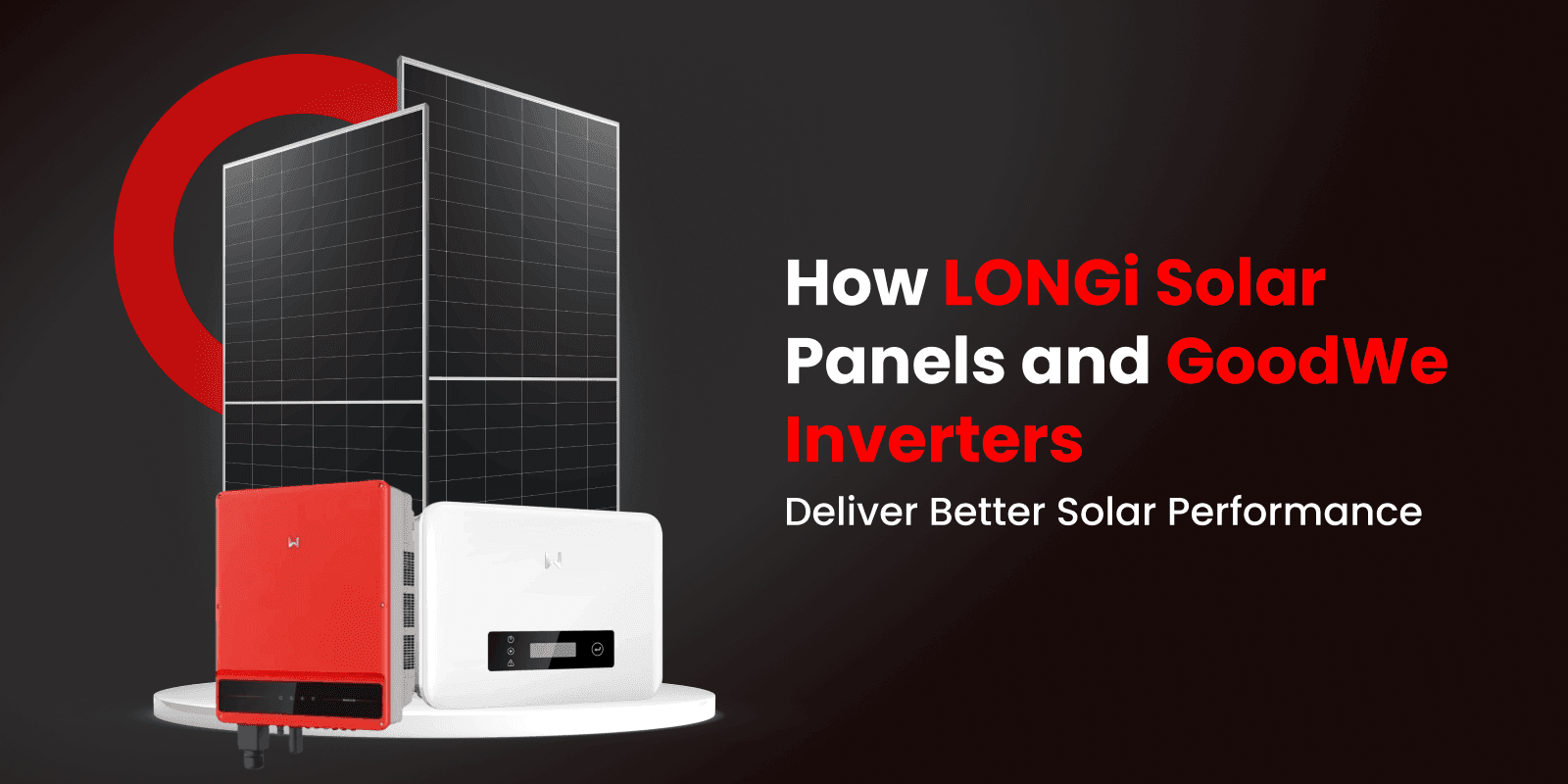
Selecting the right combination of solar panels and inverters is an important part of designing an effective solar energy system. While solar panels generate electricity from sunlight, inverters convert that electricity into a form that can be used by homes and businesses.
For solar installers and businesses, combining suitable LONGi solar panels with GoodWe inverters can provide a practical approach to developing residential and commercial solar installations. Both brands offer different product ranges and technologies that can be considered according to project requirements.
However, overall system performance depends on more than the individual components. Panel specifications, inverter capacity, electrical compatibility, installation conditions and system design all influence how effectively a solar installation operates.
Understanding how these components work together can help solar professionals make informed product selections for different projects.
Understanding LONGi Solar Panels
LONGi is a solar technology manufacturer known for its photovoltaic modules and ongoing development of high-efficiency cell technologies.
Its product portfolio includes different module series designed for residential, commercial and utility-scale applications. Depending on the model, LONGi modules use different cell architectures and construction methods to address varying installation requirements.
Some important considerations when evaluating LONGi solar panels include:
- Cell technology and module design
- Rated power output
- Module conversion efficiency
- Temperature coefficient
- Mechanical load specifications
- Product and performance warranties
- Module dimensions and weight
For installers, these specifications provide a useful starting point when comparing modules and selecting products for a particular solar project.
Cell Technology and Module Efficiency
Solar cell technology plays an important role in determining how effectively a module converts sunlight into electricity.
LONGi has developed several generations of photovoltaic technologies, including PERC and its newer back-contact cell technologies, such as HPBC.
These developments focus on improving cell efficiency, managing electrical losses and supporting higher module power output.
Module efficiency is particularly relevant for installations where available roof space is limited. Higher-efficiency modules can help achieve a required system capacity using less installation area, depending on the module dimensions and project layout.
However, efficiency should always be considered alongside other technical specifications rather than used as the only selection criterion.
Performance Under Different Operating Conditions
Solar modules operate outdoors and experience changing environmental conditions throughout the day.
Temperature, sunlight intensity, shading and installation orientation can all influence electricity generation.
The temperature coefficient is one specification installers should review when comparing LONGi modules. It indicates how module power output changes as cell temperature increases above the reference testing temperature.
For Australian installations, where rooftop temperatures can become high during summer, understanding this specification is useful when estimating expected system generation.
Understanding GoodWe Inverters
GoodWe manufactures solar inverters and energy storage solutions for residential, commercial and industrial applications.
Its product range includes grid-connected inverters, hybrid inverters and integrated energy storage solutions.
A solar inverter performs an essential function within a photovoltaic system by converting the DC electricity generated by solar panels into AC electricity for household or business use.
Depending on the inverter model, additional features may include:
- Multiple Maximum Power Point Trackers (MPPTs)
- Solar generation monitoring
- Grid interaction and export management
- Battery integration
- Energy management functions
- Backup power capabilities on supported models
The specific features vary across GoodWe product families, making it important to select an inverter according to the requirements of the installation.
Understanding MPPT Technology
Maximum Power Point Tracking (MPPT) is an important inverter function.
Solar panels experience changing operating conditions throughout the day. MPPT technology continuously adjusts the electrical operating point to help the solar array deliver available power efficiently.
Some GoodWe inverter models include multiple MPPT inputs. This can be useful for installations where solar panels are positioned across different roof orientations or experience different sunlight conditions.
For example, a commercial building may have solar panels installed across eastern and western roof sections. An inverter with suitable independent MPPT inputs can provide greater flexibility when designing the electrical configuration.
The number of MPPTs and supported string arrangements should always be checked against the selected inverter datasheet.
How LONGi Solar Panels and GoodWe Inverters Work Together
Solar panels and inverters perform different but connected functions within a solar energy system.
LONGi modules generate DC electricity from sunlight, while a compatible GoodWe inverter converts that electricity into AC power.
The basic energy flow is:
LONGi Solar Panels → GoodWe Inverter → Electrical Loads
In a grid-connected installation, electricity can be used by the property, while surplus generation may be exported to the electricity network according to the applicable connection and export arrangements.
When these components are appropriately matched, they can form part of a well-designed solar installation.
However, using products from established manufacturers does not automatically guarantee improved system performance. Correct electrical matching and system configuration remain essential.
Key Factors When Matching LONGi Panels With GoodWe Inverters
Selecting compatible components requires more than matching the total panel wattage with the inverter’s rated capacity.
Solar professionals should evaluate several technical specifications before finalising a system design.
1. Voltage Compatibility
Every solar inverter has defined maximum DC input voltage and MPPT operating voltage limits.
The voltage characteristics of the LONGi modules must remain within the inverter’s permitted operating range.
Installers should calculate the string voltage under relevant temperature conditions, particularly the maximum open-circuit voltage during low-temperature conditions.
This helps ensure the proposed panel configuration is suitable for the selected inverter.
2. Current Requirements
Module current specifications must also be checked against the inverter’s maximum input current and short-circuit current limits.
This is particularly important when working with newer high-power solar modules, as current characteristics can vary between product generations.
The inverter must support the proposed string arrangement within its electrical limits.
3. Inverter Capacity
The inverter should be appropriately sized for the proposed solar array.
Installers generally consider the DC capacity of the panel array in relation to the inverter’s AC output capacity.
The appropriate DC-to-AC ratio depends on the inverter specifications, site conditions, system objectives and applicable Australian requirements.
4. MPPT Configuration
The number of MPPT inputs can influence how panels are arranged across different roof sections.
Where a project includes multiple orientations or different shading conditions, the installer should evaluate whether the inverter has sufficient independent MPPT inputs for the proposed configuration.
5. Australian Compliance
Solar equipment selected for Australian installations must meet applicable electrical, product and grid-connection requirements.
Installers should check current product approvals, relevant certifications and applicable inverter requirements before specifying equipment.
These checks should be completed for the exact product models being used.
Benefits of Combining Suitable Solar Panels and Inverters
When correctly selected and configured, LONGi modules and GoodWe inverters can support several important aspects of solar system design.
Efficient Use of Available Roof Space
LONGi offers modules across different power ratings and formats. Selecting a suitable module can help installers plan the available roof area according to the required system capacity.
This is particularly relevant for commercial buildings where rooftop space may be shared with ventilation equipment, access pathways and other infrastructure.
Flexible System Configuration
GoodWe offers inverter models with different power ratings, phases and MPPT configurations.
This gives installers options when designing systems for different property sizes and electrical requirements.
The appropriate model depends on the panel arrangement, site conditions and expected electricity demand.
Solar Generation Monitoring
Monitoring is useful for understanding how a solar system performs after installation.
Depending on the selected GoodWe inverter and monitoring setup, installers and system owners can access information about solar generation and system operation.
Monitoring data can also help identify unexpected changes in production and support troubleshooting when required.
Options for Battery Integration
Some GoodWe inverter families are designed to support battery storage.
For projects where energy storage is part of the system design, installers can evaluate compatible GoodWe hybrid inverter models alongside suitable battery products.
This allows solar generation and battery storage requirements to be considered during the initial design process.
Battery compatibility should be verified using the manufacturer’s current documentation for the exact inverter and battery models.
LONGi and GoodWe for Residential Solar Projects
Residential installations often involve limited roof space, different roof orientations and varying household electricity consumption.
When selecting LONGi solar panels and GoodWe inverters for residential projects, installers should consider:
- Available roof area
- Expected household electricity consumption
- Solar panel orientation and tilt
- Shading from nearby structures or trees
- Required system capacity
- Inverter phase and output rating
- Future battery storage requirements
A suitable combination can help create a solar system that reflects the property’s actual energy requirements rather than relying on equipment selection based only on headline specifications.
LONGi and GoodWe for Commercial Solar Installations
Commercial solar projects can involve larger arrays, multiple roof sections and higher electricity demand.
For these installations, product selection requires additional attention to electrical design and inverter configuration.
Solar panels for businesses should be evaluated according to available roof space, operational electricity consumption and expected solar generation.
Important considerations include:
- Total available installation area
- Commercial electricity demand
- Three-phase electrical requirements
- Inverter capacity and MPPT configuration
- Cable sizing and electrical protection
- Roof structure and mounting arrangements
- Monitoring and maintenance requirements
GoodWe offers dedicated commercial and industrial inverter ranges, while LONGi provides PV modules for different project applications.
The selected products should be matched to the electrical and physical requirements of each installation.
What Installers Should Check Before Sourcing These Products
Before ordering LONGi solar panels and GoodWe inverters, solar businesses should review the following:
| Selection Factor | What to Verify |
|---|---|
| LONGi module model | Power rating, dimensions and cell technology |
| Module efficiency | Rated efficiency and performance specifications |
| Temperature coefficient | Power variation with temperature |
| GoodWe inverter model | Rated output and inverter type |
| DC input voltage | Maximum voltage and MPPT operating range |
| Input current | Maximum operating and short-circuit current |
| MPPT configuration | Number of trackers and supported strings |
| Battery requirements | Supported battery models, where applicable |
| Product approvals | Current Australian compliance requirements |
| Warranty | Manufacturer warranty terms and conditions |
Checking these details before procurement can help reduce product-selection errors and avoid unnecessary complications during installation and commissioning.
Why Product Sourcing Matters for Solar Businesses
For solar installers and retailers, product selection is only one part of managing a successful project.
Reliable product sourcing, stock availability, delivery arrangements and access to technical support can also influence project planning.
Working with a solar distributor that supplies multiple product categories can simplify procurement by providing access to panels, inverters, batteries, mounting systems and electrical components.
At Achievers Energy, we support Australian solar installers, retailers and businesses with wholesale access to solar products from established manufacturers.
Our product range includes LONGi solar panels and GoodWe inverter solutions, allowing solar professionals to explore different equipment options according to their project specifications.
Building Better Solar Systems With the Right Product Combination
LONGi solar panels and GoodWe inverters serve different but complementary roles within a photovoltaic installation.
LONGi modules provide the solar generation component, while GoodWe inverters manage power conversion and, depending on the model, additional energy management functions.
The key to achieving effective system performance is selecting compatible products and designing the complete installation around the property’s requirements.
For solar businesses, understanding module specifications, inverter capacity, MPPT configuration and system compatibility is essential before finalising equipment selection.
Achievers Energy supports Australian solar professionals with access to LONGi solar panels, GoodWe inverters and other solar energy products for residential and commercial projects.
Looking to source LONGi panels and GoodWe inverters for your next project? Contact Achievers Energy to discuss available products and your wholesale supply requirements.


