
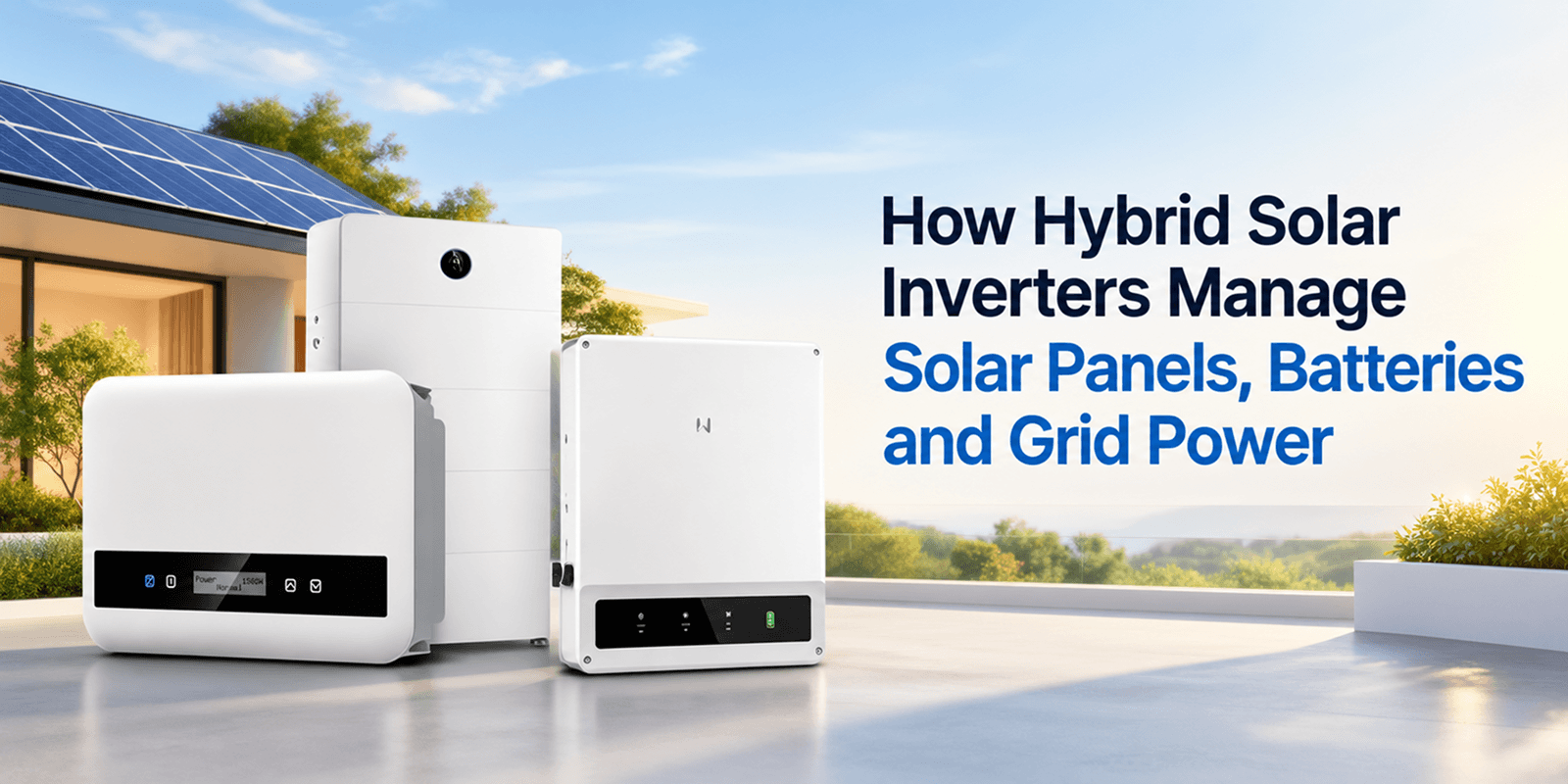
As solar and battery systems become more common across Australia, choosing the right hybrid inverter is an important part of system design. For solar installers, distributors and system designers, understanding how solar generation, battery storage and grid electricity work together can make equipment selection easier.
Hybrid solar inverters manage the flow of energy between solar panels, compatible battery storage, electrical loads and the grid. Depending on the model and system configuration, they can convert solar power into usable AC electricity, charge and discharge batteries, and support grid interaction or backup power.
For Australian solar professionals, understanding these functions helps when comparing inverter specifications, checking battery compatibility and selecting equipment for residential and commercial projects.
How Hybrid Solar Inverters Manage Solar Generation
Solar panels produce electricity throughout the day, with output varying according to sunlight, temperature, panel orientation and shading.
The hybrid inverter converts available solar power into AC electricity for connected loads. If the system generates more energy than the loads require, the surplus can be directed to battery charging or grid export, depending on the system settings.
A typical operating sequence may look like this:
- Solar generation supplies active electrical loads.
- Surplus solar energy charges the battery, provided it is within the configured charging limits.
- Additional surplus electricity may be exported to the grid where permitted.
- When solar generation is insufficient, the system can draw on battery storage or grid electricity according to its operating settings.
These priorities are not identical across all hybrid inverters. Battery state of charge, electricity tariffs, export restrictions and energy-management settings can all influence how the system operates.
For installers, understanding these settings is important when designing a system around a customer’s energy usage and electricity costs.
How a Solar Inverter With Battery Storage Works
Adding battery storage allows a solar system to use some of its surplus daytime generation after the sun goes down.
For example, a residential solar installation may generate more electricity than the household needs around midday. Instead of exporting all the surplus energy, the system can store some of it in a compatible battery.
During the evening, when solar production decreases and household demand increases, the battery can discharge stored energy to supply supported loads. Grid electricity can supplement the system when solar and battery supply are insufficient.
The amount of energy available depends on several factors, including:
- Battery capacity and usable energy
- Maximum charging and discharging power
- Battery state-of-charge limits
- Conversion losses
- Household or commercial energy demand
When specifying a solar inverter with battery storage, installers should assess the complete system rather than relying on inverter output ratings alone. The inverter, battery and solar array must work together within their respective operating limits.
How a Hybrid Solar Inverter and Grid Power System Works
Grid interaction is an important consideration when selecting a hybrid inverter for an Australian installation.
A hybrid solar inverter and grid power system can draw electricity from the grid when solar generation and battery supply cannot meet demand. Depending on the model and configuration, it may also export surplus solar electricity or charge the battery from the grid when the equipment and operating settings permit it.
Important factors to check include:
- Grid voltage and frequency requirements
- Permitted export capacity and export-control functions
- Battery charging and discharging schedules
- Support for grid charging
- Configurable state-of-charge limits
- Backup operation during grid outages
- Applicable Australian standards and electricity network requirements
These capabilities vary by product. Installers should confirm the manufacturer’s specifications and applicable network requirements before finalising the system design.
DC-Coupled vs AC-Coupled Battery Systems
Battery storage can be integrated into a solar installation using either a DC-coupled or AC-coupled architecture. The right option depends on the project requirements and the existing equipment.
DC-Coupled Systems
In a DC-coupled system, the solar array and battery are connected through a compatible DC-based architecture managed by the hybrid inverter.
Depending on the equipment design, this arrangement can reduce the need for separate solar and battery inverters. It can be particularly suitable for new solar installations where the inverter and battery are selected as a compatible combination from the outset.
The actual conversion pathway and efficiency depend on the system design and operating conditions.
AC-Coupled Systems
In an AC-coupled system, the solar inverter converts the panels’ DC electricity into AC power, while a separate battery inverter manages battery charging and discharging.
This arrangement can be useful when adding battery storage to an existing solar installation, particularly where retaining the existing solar inverter is practical.
However, suitability depends on the equipment already installed, battery requirements, available space, project costs and the desired operating functions.
A hybrid inverter is not automatically the best choice for every retrofit. Comparing both architectures can help installers identify the most suitable solution.
What Happens When the Battery Is Fully Charged?
When a battery reaches its configured upper state-of-charge limit, it generally stops accepting additional charge within the applicable battery-management limits.
Solar generation can continue supplying active loads, while surplus electricity may be exported to the grid if the system is configured and approved to do so.
If export is restricted or unavailable and there is insufficient demand or storage capacity, the inverter may limit solar generation to maintain safe system operation.
The response depends on the inverter, battery controls, export settings and grid connection requirements. Installers should understand this behaviour when configuring the system and explaining expected performance to customers.
How Hybrid Inverters Manage Battery Charging and Discharging
A hybrid inverter coordinates battery charging and discharging within the limits supported by the battery and its battery management system (BMS).
Depending on the product, configurable settings may include minimum and maximum state of charge, charging current, discharge power and time-based operating schedules. Some systems also support operating modes designed around electricity tariffs or backup reserves.
Before selecting an inverter and battery combination, installers should verify:
- Supported battery voltage range
- Maximum charging and discharging power
- Compatible battery models and configurations
- Battery communication protocol
- Permitted state-of-charge limits
- Firmware requirements and commissioning procedures
Battery compatibility should never be assumed simply because two products have similar electrical ratings. Using a manufacturer-supported combination helps reduce commissioning issues and supports reliable system operation.
Can a Hybrid Inverter Provide Backup Power?
Some hybrid inverters can supply backup power during a grid outage, but this capability depends on the model and installation configuration.
A backup-capable system may require compatible battery storage, dedicated backup terminals or switching equipment, appropriate electrical protection and a separate essential-load or whole-home backup circuit.
During an outage, the installation must safely isolate the backed-up circuits from the grid before supplying them with electricity. Not every grid-connected hybrid inverter can operate independently during an outage.
The available backup capacity depends on inverter output power, battery discharge capability, motor starting currents and the loads connected to the backup supply.
For example, a system designed to supply lights, communications equipment and a refrigerator may have different requirements from one intended to support air conditioning, pumps or a larger range of household appliances.
Before specifying backup functionality, installers should confirm which circuits and phases can be supplied, the applicable output limits, and whether additional equipment is required.
Selecting Hybrid Solar Inverters for Different Projects
The right hybrid inverter depends on the solar array, expected electrical loads, battery requirements, grid connection and intended operating strategy.
Residential projects may prioritise household energy consumption, future battery expansion and backup capability. Commercial installations may require higher output capacity, three-phase supply, export controls and integration with existing electrical infrastructure.
Before procurement, consider the following specifications:
| Selection factor | What to check |
|---|---|
| Rated output | Suitability for expected loads and supply requirements |
| PV input | Maximum DC voltage, current and supported array capacity |
| MPPT configuration | Compatibility with planned roof orientations and solar strings |
| Battery compatibility | Supported models, voltage ranges and communication protocols |
| Charge and discharge power | Ability to meet the project’s storage requirements |
| Grid functions | Export controls, grid charging and supported operating modes |
| Backup capability | Supported loads, output limits and additional equipment |
| Monitoring | Available monitoring platforms and communication features |
| Compliance | Applicable Australian standards and network requirements |
| Warranty and support | Manufacturer warranty terms and technical assistance |
Reviewing these specifications before ordering can help reduce equipment mismatches, commissioning delays and unnecessary project costs.
Why Compatibility Matters for Solar Distributors and Installers
For solar distributors, supplying a hybrid inverter involves more than matching a product to the nominal system size.
Installers need equipment that suits the electrical design, battery requirements, grid connection and intended operating functions. Compatibility documentation becomes particularly important when combining products from different manufacturers or product families.
Checking supported configurations before ordering can help prevent unsuitable equipment selections and avoid delays during installation. For larger projects, product availability, delivery lead times, technical documentation and after-sales support are also worth considering.
A well-matched inverter and battery combination helps installers develop systems that meet project requirements while giving customers a clearer understanding of the system’s capabilities and limitations.
Sourcing Hybrid Solar Inverters With Achievers Energy
Achievers Energy supplies solar and energy-storage products to Australian installers, retailers and solar businesses.
When comparing hybrid inverters, consider how each model will work with the planned solar array, battery storage, grid connection and electrical loads. Product specifications, battery compatibility lists and applicable installation requirements should guide the final selection.
Reviewing these details early can help solar businesses make informed procurement decisions and source equipment suited to their customers’ requirements.
Explore the solar inverter range at Achievers Energy to compare available products for different installation requirements.
For assistance with product selection, battery compatibility or upcoming solar projects, contact Achievers Energy to discuss your equipment requirements.
Conclusion
Hybrid solar inverters coordinate solar generation, battery storage and grid electricity within a compatible energy system. Depending on the model, their functions can include DC-to-AC conversion, battery charging and discharging, grid interaction and backup power.
For Australian solar installers and distributors, choosing the right inverter means looking beyond rated output. Battery compatibility, PV input limits, grid functions, backup requirements and applicable compliance obligations all play an important role in system design.
By checking these factors before procurement, solar businesses can make more informed equipment decisions and develop systems suited to their customers’ energy requirements.
Explore Achievers Energy’s solar inverter range or contact the team to discuss suitable equipment for your next solar and battery project.


