
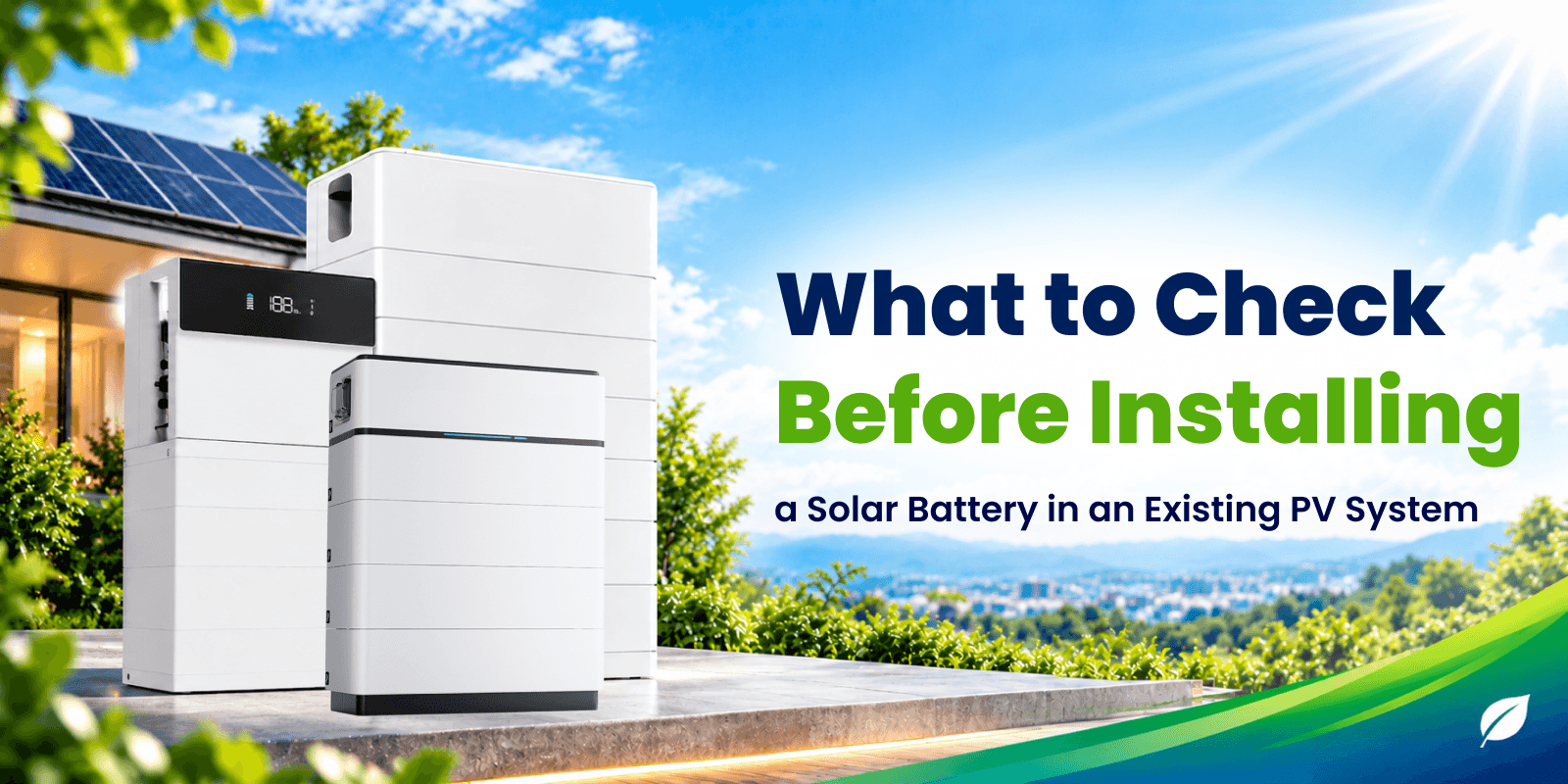
Adding a battery to an existing solar photovoltaic (PV) system can help store surplus solar energy for use when solar generation is lower. This can be useful for households and businesses that want to make better use of the electricity generated by their solar panels.
Before selecting a battery, it is important to review your existing equipment, electricity consumption, available solar generation and future energy requirements. Understanding these factors can help you choose a suitable solar battery storage system for your needs.
1. Understand Your Existing Solar PV System
Start by reviewing your existing solar panels, inverter and electricity consumption. Understanding how much electricity your system generates and when your property uses energy can help identify suitable battery storage options.
The existing system configuration and inverter type can influence how a battery is integrated. Reviewing these details helps establish which battery options may be compatible with the current setup.
2. Check Battery Compatibility
Not every battery is compatible with every solar inverter or PV system configuration. Some battery systems require a separate battery inverter, while others work with compatible hybrid inverters.
Before selecting a battery, consider:
- Compatibility with your existing inverter
- Supported battery capacity and configuration
- Communication and monitoring requirements
- Available options for future expansion
A qualified solar professional can assess the existing equipment and help determine which configuration is suitable for the project.
3. Choose the Right Solar Battery Capacity
Choosing an appropriate solar battery capacity is essential when planning energy storage. Battery capacity is generally measured in kilowatt-hours (kWh) and indicates how much energy a battery can store.
Your storage requirements depend on electricity consumption, available solar surplus and when energy is needed.
Consider the following factors:
- Average daily electricity consumption
- Evening energy usage
- Surplus solar generation
- Intended use of the battery
- Potential changes in future electricity demand
It is also important to compare nominal and usable battery capacity, as these figures can differ between products. Reviewing your energy usage can help identify a suitable capacity without selecting a system that is unnecessarily large or too small for your needs.
4. Review Your Solar Energy Generation
Solar generation affects how much surplus electricity may be available to charge a battery. Reviewing your system’s performance can help you understand the potential role of energy storage.
Useful information includes:
- Average daily solar generation
- Daytime electricity consumption
- Electricity exported to the grid
- Electricity purchased from the grid
- Seasonal variations in solar production
Solar output can change with weather conditions, shading and seasonal daylight. Reviewing monitoring data over a representative period can provide a clearer picture of your system’s energy production.
5. Consider Solar Battery Installation Requirements
Before installing a solar battery, consider the available space, existing electrical setup and compatibility with your solar equipment. The installation location should suit the selected battery and provide sufficient access for monitoring and maintenance. Following the manufacturer’s instructions helps ensure that the battery is installed appropriately for its intended use.
When reviewing solar battery installation requirements, consider:
- Available installation space
- Compatibility with existing solar equipment
- Electrical connections
- Access for maintenance
- Manufacturer installation instructions
- Applicable safety requirements
6. Select a Suitable Battery Location
The battery location should be suitable for the selected product and its installation requirements. Consider environmental conditions, protection from physical damage and the space needed for the battery and associated equipment.
Choosing an appropriate location can also make the system easier to access for inspection and maintenance.
7. Consider Your Electricity Usage Patterns
Households and businesses can have different electricity consumption patterns. Some use more energy during the day, while others have higher demand in the evening.
Reviewing electricity bills and available monitoring data can help identify when energy demand is highest. Comparing this information with solar generation can help determine whether storing surplus electricity for later use suits your requirements.
Future changes, such as adding appliances, electric vehicle charging or expanding business operations, may also affect storage needs.
8. Explore Backup Power Options
Some battery systems can provide backup power during electricity interruptions, but this function is not available automatically with every configuration.
If backup power is important, confirm whether the selected battery and inverter support it and whether additional equipment is required. It is also useful to identify which appliances or electrical circuits need to operate during an outage.
These requirements can influence the equipment selection, power output and expected backup duration.
9. Compare Battery Features and Warranty Information
Comparing product specifications can help you identify a battery that suits the project. Consider more than the purchase price when evaluating available options.
Important factors include:
- Usable battery capacity
- Charge and discharge power ratings
- Energy efficiency
- Monitoring capabilities
- System compatibility
- Warranty terms and conditions
- Supported expansion options
Specifications and warranty coverage vary between products. Reviewing manufacturer documentation and the overall installation requirements can help you compare options more accurately.
10. Plan for Future Energy Requirements
Electricity needs may change over time due to new appliances, electric vehicle charging or business expansion. Considering these possibilities can help you assess whether a battery system with expansion options would be useful.
Some systems support additional battery modules, while others have specific capacity or configuration limits. If future expansion is important, check the manufacturer’s specifications to understand the supported options.
Conclusion
Adding a battery to an existing solar PV system requires careful consideration of inverter compatibility, solar generation, electricity consumption, installation conditions and storage capacity.
By reviewing these factors and comparing suitable products, homeowners, installers and businesses can make more informed decisions about integrating battery storage into an existing solar setup.
Achievers Energy offers solar battery and energy storage products for solar projects. Reviewing product specifications and supported system configurations can help identify options suited to different project requirements.


